 Yoga Classes in Austin
Charles teaches Hatha Yoga classes at two studios in Austin. All levels welcome. $25/class for drop-ins or $150/8 classes.
Private Instruction
Individual instruction in yoga (all levels); pranayama; meditation; stress management; yoga therapy; and life coaching – $125/hr.
 Workshops in Tx, USA
Workshops on a variety of topics offered at studios throughout Texas and the US as well as National & International Conferences.
Yoga/Meditation Retreats
Since 1991 Charles has led Yoga & Meditation Retreats at locations in Texas, Costa Rica, Mexico, and Guatemala.
Yoga/Writing Retreats
Charles & award winning author Patricia Lewis offer 4 day Yoga & Writing retreats in Texas and Massachusetts.
Yoga Videos
Charles has created a collection of yoga videos on asana, pranayama, and visualizations that are offered for free.
Recent Blog Posts & Essays
 September 19, 202600
 July 24, 2026
 April 11, 2026
The Living Web
The Living Web: Yoga, Fascia, and the Science of Transformation by Charles MacInerney, E-RYT 500, C-IAYT Yoga’s benefits have...
April 11, 2026

About Charles
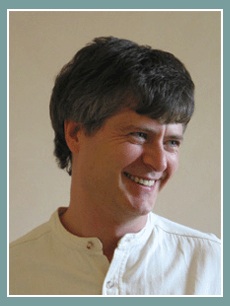
Charles MacInerney holds the highest level of recognition from both the Yoga Alliance (E-RYT-500) and from the International Association of Yoga Therapists (1000 hr. Yoga Therapy Certification).
Charles inherited his Mother’s interest in Eastern philosophy and his Father’s love of physics. As a teenager he was torn between these two paradigms but the more he studied science in school, read Eastern philosophy and practiced Yoga & Meditation on his own, the more he saw how each enriched the other.
Over 50 years of personal practice and 35 years teaching yoga Charles has fully integrated these two great influences on his life. The ancient traditions of the East and modern innovations of the West come together through his practice and illuminate his teaching – whether it is an asana class, a spiritual retreat, or a corporate team building workshop. Charles is best known for his creativity, compassion, humor and intelligence. Read more about his story, credentials, and public speaking, etc… (You can also find him on BookRetreats.com)
New to Yoga?
Your first decision in yoga, who to study with, is one of the most important decisions you will make. It is easy to lay down bad habits and even injure yourself in yoga, especially for new students. It is the responsibility of your first teacher to help you to create a solid foundation upon which to build, but just as importantly, to help you fall in love with the practice, not just the benefits of having practiced.
Since 1989 Charles has introduced over seven thousand new students to yoga. He still takes a special delight in working with beginners.
New students are always welcome to attend Charles’ classes, workshops and retreats. Class sizes are kept small, allowing for more personal attention and customized individual instruction. Charles, with the help of his regular students, works hard to maintain a safe, non-competitive, accepting and friendly environment for new students to take their first steps on the path of yoga. See class schedule and pricing.
Helpful Guidelines for New Students….
1. Yoga is practiced barefoot. If you have custom orthotics please let the teacher know in advance of class so that they may make accommodations.
2. No special clothing is necessary as long as you dress modestly and comfortably.
3. Please do not use perfume as others may have chemical sensitivity.
4. Please turn off cell phones, and leave them outside the studio in the hall way. Even on ‘vibrate’ cell phones are distracting to other students.
5. Yoga should be practiced on an empty stomach, 1-2 hours after a light meal, longer after a full meal.
6. Please tell the yoga instructor prior to class if you are pregnant, on your period, medications, have any injuries, or illness.
Experienced?
Stepping into a yoga studio for the first time, it is not uncommon for students to feel some anxiety and/or frustration. However, for the more experienced student the enemy becomes boredom. The more you practice the same routine, the more likely that you will check out mentally.
There are several ways to avoid this. One is to occasionally change teachers, or even styles of yoga. This will keep you in beginners mind and keep your yoga fresh. Another solution is to work with teachers who employ variety in their teaching. This variety should not just be in their sequencing of asanas (although that is a good start), but also in the use of language, music, silence, lighting, energy of the class etc.
Although some of Charles’ students have been studying with him for 22+ years, he still manages to keep them engaged by constantly shifting his emphasis so that each class is both familiar and comfortable, but at the same time, fresh and challenging. Charles teaches to the middle of his class, but finds time to work individually with more advanced students to introduce new and more challenging poses, or take a familiar pose to a deeper level of understanding.
If you have never worked with Charles, you will find his voice unique in the world of yoga. He has studied with dozens of yoga teachers from multiple styles, but is also influenced by other modern body work like Feldenkrais, Aston Patterning, Pilates, Alexander Technique, Somatics, myo-facial release, and also from science (physics, psychology, sociology, neuro-plasticity etc.). But mostly he is guided by his own insights over 40 years of personal practice of yoga since the age of 11.
Even now, his personal practice continues to evolve, as does his teaching. In addition to his regular yoga classes, if you are interested in going deeper with your yoga, Charles offers workshops, usually 3 hours long, on a variety of topics, as well as 3 and 8 day yoga & meditation retreats, and teacher training.
Injured or ill?
 Charles Macinerney holds the highest level of recognition from both the Yoga Alliance and from the International Association of Yoga Therapists, and has presented at several international yoga therapy conferences.
If you are pregnant, sick, injured, on medication, or recovering from surgery, you need to be more selective in who you study yoga with.
Yoga teachers are trained in how to teach yoga to healthy people. The same yoga class that is beneficial for those already in good shape may actually be harmful for those that are not. This is why it is important to seek out a yoga therapist (a much higher level of training).
Many traditional asanas will need to be modified to make them safe for you to practice until you are 100% again. A good yoga therapist does not memorize solutions to problems because no two problems are ever the same. Instead, they learn how to understand complex problems and then solve them. Unfortunately, this skill takes lots of time and experience to cultivate.
The first decision you need to make is whether or not you should join a group class, or first seek out private instruction. Here are some guidelines to help you decide
- If you have never practiced yoga before, and you have limitations, consider starting with a private one-on-one class to assess and bring you up to speed before integrating into the public class. Usually just one private session is enough to ensure smooth entry to group classes.
- If you have some experience in yoga, but your limitations are substantial, a private class is a good idea to learn which poses to modify and how, before rejoining a public class.
- If your limitations are mild, and you are experienced in yoga, you might be ok joining the ongoing public yoga classes.
If you are not sure, please contact Charles and describe your level of experience with yoga, and what your current limitations are, and he can make some recommendations for you.
Remember, it is your responsibility both in private and in public yoga classes to let the instructor know before class if you have any limitations that might affect your practice.
Charles has been practicing Yoga Therapy for twenty years. Since 1997 he has set up and run two Yoga therapy clinics, first at Seton Hospital and later at the Austin Heart Hospital. He has presented and been key-note speaker at dozens of wellness conferences, including American Cancer Society, and the American Heart Association, and the International Conference on Yoga for Positive Health. In June, 2014 he will be teaching at the International Association of Yoga Therapists annual conference called SYTAR (scroll to bottom of Page).
Charles charges $15/class for a drop in fee, and $85/hr for private instruction. He usually meets private clients at his home/studio, but also sees clients in their own home if they prefer ($20 travel charge).
Yoga Teacher?
For the past 20 years Charles has offered Yoga Teachers a 30% discount on any Yoga & Meditation Retreat that he offers. Participating teachers are free to come in the role of student, but are also invited to assist with the yoga if they want to.
For teachers hoping to deepen and widen their yoga practice, Charles offers 3 hour workshops at a variety of studios throughout Texas and beyond. Topics include specialty asana workshops (like balance, or opening the hips etc), pranayama, meditation, concentration, and yoga philosophy.
In Charles’ regular and intermediate yoga classes, if you let him know that you are a yoga teacher, or hoping to become one, he is happy to give you a little extra attention during class. He is also available for private consultations on all aspects of teaching yoga, from lesson planning to giving feedback to students to the business of yoga.
As a yoga teacher, you might also be interested in the Texas Yoga Retreat, which Charles co-founded in 2000. This annual retreat, held a beautiful Hindu Ashram, 20 minutes SW of Austin, is open to all levels, but has special workshops at every time slot specifically designed for yoga teachers, including a Yoga Therapy track. Faculty are chosen primarily from senior Yoga Teachers from across Texas, but also includes a few teachers from out of state.
In 1999 Charles co-founded the highly successful and internationally known yoga teacher training school (the Living Yoga Program). He has enjoyed working with yoga teachers and aspiring teachers. He has often been called a ‘teacher’s teacher’, both by yoga teachers, and by college professors and other teaching professionals. He is very proud of the Living Yoga Program and always happy to visit with potential students about the program.
Free Yoga!
Charles has always been a strong advocate for making Yoga accessible to everyone, regardless of race, gender, age, ability or income.
For the past 25 years, he has taken yoga into hospitals, corporations, nursing homes, government agencies, children’s’ shelters, schools, colleges, at risk youth, athletes, and more.
In 1992 Charles began offering his Full Moon Yoga classes, a free yoga class held once a month at a scenic overlook. It is open to all levels and backgrounds. We hope you can join us at one of these classes in the future.
In 1998 Charles co-founded the Free Day of Yoga, and helped spread this event from Austin to Houston, Dallas, San Antonio, and Tyler, and in the process helped those cities organize their yoga communities. He has continued to help with the organization of this event every year and also teaches at least one free workshop. If you have not participated in this event you are missing out!
All videos, whether accessed from this website or any other site, are for promotional purposes only.
All videos are free. Donations are a gift and not in exchange for anything of value. Donations are not tax deductible.
Social Media!
Any help with marketing is greatly appreciated. Like us on facebook, follow us on twitter, give us a yelp review, etc.
YogaTeacher
Full Moon Yoga
Charles on Twitter
Yelp Reviews
Linked In
Google +
Tumbler
Youtube Channel
Vimeo Channel
Sign Up for Yoga Newsletter!
All content is free. If you wish to support me, please donate here. Donations are a gift and not in exchange for anything of value. Donations are not tax deductible.
A portion of every donation will be used to purchase dog food for Toby.
Yoga as a Movement of Love
How the chemistry of connection transforms what practice gives back
You already know it in your body: yoga practiced in community feels different from yoga practiced alone. The room holds something the mat at home cannot. And a retreat? That is something else again — a different order of opening altogether.
Science is now catching up to what you have always felt. It turns out the ancient teachings about love, connection, and satsang — the company of seekers — are not merely poetic. They are biochemically precise. Chronic loneliness carries the same mortality risk as smoking. The body, it seems, is not designed for solo practice. Swami Satchidananda was right: sangha is not optional.
 The Chemistry of Connection
At the center of this story is oxytocin — the body’s chemistry of belonging. You may know it as the hormone released during childbirth, breastfeeding, and a really good hug. But it also flows when we sing together, practice together, eat together, and genuinely listen to one another. It quiets the brain’s alarm system, softens our reactivity to stress, and — this is the part worth savoring — makes us literally more capable of empathy.
Yoga generates oxytocin through several pathways at once. The breathing practices stimulate the vagus nerve, which is linked to oxytocin release. Even a brief mindfulness session raises measurable oxytocin levels. And then there is pandiculation — that instinctive, full-body stretch-and-yawn that arises when the body finally feels safe enough to let go. You know the one. You have seen it in dogs waking from a nap, in cats uncoiling from the windowsill, and if you are lucky, in yourself after a really good savasana.
That yawn-stretch is not laziness. Neuroscience has found that the stretch-yawn reflex is orchestrated through oxytocin neurons in the hypothalamus: oxytocin both triggers the response and is released by it. When a student pandiculates on the mat — that unguarded, animal unfolding — the body is announcing that it feels safe. And safety, it turns out, is where the real practice begins. This is neurochemically distinct from ordinary stretching, which works mechanically on tissue. Pandiculation works through the nervous system and carries the warm, melting quality that ordinary stretching simply does not.
Oxytocin also sets off a cascade through dopamine, serotonin, and nitric oxide — collectively shifting the body toward what we might call the physiology of love: calmer, warmer, more open, more alive to connection.

Your Emotional State Is Part of the Pose
Here is something most of us were not taught in teacher training: the biological return on physical practice depends heavily on the emotional state you bring to it.
Practice in a spirit of ease and warmth, and oxytocin cascades through the body, dilating blood vessels, reducing inflammation, and supporting muscle repair. Research has found that oxytocin actually declines with age — and that this may be a significant driver of the muscle loss we associate with getting older. Practicing in a state of love, it seems, is not a luxury. It is maintenance.
Practice in a state of driven striving or self-criticism, and the nervous system cannot tell the difference between Warrior II and a workplace emergency. Cortisol stays elevated. The body breaks down rather than builds. The postures happen, the sweat happens, but the deeper gifts are quietly withheld.
Ahimsa starts on your own mat. Santosha is not a consolation prize — it is the internal environment in which practice most fully heals. Positive emotion is not what you feel after you finally nail the pose. It is the soil the practice grows in.
Personal Practice, Group Classes, and Retreats
Your home practice matters. It is more convenient. It builds the habit, maintains the thread, keeps the conversation going between you and your body. It allows you to customize your practice.
But let’s be honest about what it cannot do.
Practicing alone — especially at home, where the laundry is visible from the mat — is practice in the physiology of ordinary life. The stressors are still present. The oxytocin signals are quieter. You are less likely to break out of habits and explore new patterns. And you do not get the same boost in Oxytocin.
An in-person class changes the equation. The shared breath, the teacher’s presence, the simple fact of other bodies moving alongside yours — these are potent signals to the nervous system that you are not alone. Oxytocin rises. The practice lands differently. Students who practice regularly in community report better sleep, greater ease in their bodies, and a warmth that persists well past the closing om. This is not placebo. This is the social animal in you receiving what it was designed to receive.
A retreat does something no weekly class can do: it removes you from the chronic stressors of ordinary life long enough for the body to actually reset. The emails stop. The performance demands pause. The fractured, half-here attention that characterizes modern life begins, slowly, to settle. For many practitioners, the first day of a retreat is less about yoga and more about thawing.
But a retreat is not simply subtraction. It is addition of something rarer — sustained satsang. Shared practice morning and evening. Shared silence. Shared meals. The conversations that only happen when there is actually time for them. The laughter that arises when a group of people stops performing and starts actually being together. Every one of these is, in the language of the nervous system, an oxytocin event.
And here is what you notice, if you have been on retreat: somewhere around day two or three, the body changes. It softens in a way it does not soften at home. Students yawn in practice — those deep, animal, unashamed yawns — and stretch in ways that surprise them. Old tensions release that weeks of effort have not touched. The practice becomes effortless in a way that is almost mysterious, until you understand that the body has finally shifted from the physiology of performance into the physiology of belonging.
This is not metaphor. The body was made for this. Sangha was never an amenity. It is the condition under which we most fully become what practice intends us to be.
The Practice Was Always This
Ishvara pranidhana. Seva. Metta. The great Sanskrit words for surrender, for service, for loving-kindness. We sometimes treat these as advanced teachings — things to aspire to once the body cooperates, once the mind settles, once we have logged enough hours on the mat. But the tradition insists otherwise. These are not the fruit of practice. They are its root.
Your nervous system agrees. The body does not heal most fully when it is performing. It heals when it belongs. It opens when it is held. It receives the gifts of movement most generously when the heart that drives that movement is, in some genuine sense, warm.
Your home practice is real and it counts. But the Tuesday class with your people? That is worth more than the algorithm suggests. And the retreat — the one you have been meaning to sign up for, the one that keeps getting bumped for something more urgent — that is in a category of its own. Days of sustained practice, sustained community, sustained permission to actually let go. Students who go on retreat describe it the way people describe falling in love: something shifted, and they are not entirely sure how to explain it.
We can explain it now, at least in part. But the explanation is beside the point. The point is: go. Your body is ready for a level of opening that only belonging makes possible — and the people you have yet to meet on that retreat are already part of your sangha, whether you know it yet or not.
Charles MacInerney,
E-RYT 500, C-IAYT, YogaTeacher.com, TexasYoga.com